

Morphogenic Fields: Sheldrake’s Theory of Collective Memory
What is a morphogenic field? Why has it generated so much controversy in science and philosophy? And more telling is, how our view of life, learning, and relationships shifts? So first: What on earth is a morphogenic field? So first, let’s start with the fundamentals.
What is a Morphogenic Field?
 Sheldrake’s hypothetical construct is a theory about, after all, shared memories and memory fields that tie living creatures to one another. They also take for granted that habits, activities and even shapes of bodies cannot be encoded within the DNA molecule or arise from chance events. Instead it’s something more elusive, more fluid and holistic, as though an invisible string were connecting disparate lives.
By “field” Sheldrake refers to a sort of energy-level scaffold. Think about this: When you put a seed in the soil, it doesn’t merely grow into some generic green clump. Instead, it develops into an acorn or a sunflower, in a field unmistakably aligned with a certain “field” framework. And it isn’t so different from our notion of magnetic fields in iron. But Sheldrake takes it a step further. These magnetic fields not only affect physical vibrations but social behavior and mental thoughts as well.
Now, if that’s confusing, don’t worry you’re not alone. Isn’t this science fiction disguised as science? (I promise I’ll address that skepticism later.) For now, think of it as a classic book of nature’s tricks that transcend time and space. Isn’t that fascinating?
Theory of the Theory
 Sheldrake’s seminal “eureka” moment wasn’t simply a stroke of genius, creating something out of nothing. It came after decades of studying the patterns of plants and animals. Have you ever wondered why all zebras in the wild have unique stripes, even though they “know” they should? Or is it an instinct that feels like we inherit not just our species’ DNA but also a philosophy about the nature of life and how it should be?
This is where Sheldrake introduces the concept of morphic resonance. He argues that whenever something happens, even just once, it becomes more likely to happen somewhere else. Nature doesn’t have to create something new every time something happens. This applies not only to the structure of zebra stripes or sunflower seeds but also to habits, behaviors, and, of course, thoughts.
Imagine a more relatable situation.
Imagine that the first time your grandmother made chocolate chip cookies, they were just a bunch of burnt dough. But according to Sheldrake’s theory, every grandmother, mother, neighbor, or friend who tried that recipe would have had a little easier time making it.
For some unknown reason, it was inspired by a shared “cookie-baking discipline” where collective experience is recorded and passed down without a record.
Isn’t that comforting? Doesn’t it make you feel like the entire human race is part of a shared framework of effort, failure, and improvement? A framework of endless repetition.
From a Single Attempt to a Breakthrough in Science
 One of Sheldrake’s most famous experiments involved studying animals that seemed to learn from each other invisibly. He referred to this as the “rat-maze debate” in the early 20th century. Researchers found that rats in one location began to learn to escape a maze faster over time. But what caught everyone off guard was that other rats, placed in a completely different area and never exposed to the maze before, somehow learned to be more efficient over time.
Sheldrake argued that these rats were not thinking or “telepathically” communicating with each other but were tapping into the same morphogenetic domain that their lab rat cousins
If rats aren’t enough to convince you, consider human culture. Why do certain styles of clothing or words suddenly appear everywhere in the world? (Sheldrake’s theory doesn’t fully explain why people dance on TikTok, but it gets pretty close!) He argues that this phenomenon is due to collective fields that accumulate over time. Collective fields make exposure easier and create more reproducible patterns. Isn’t that cool?
Now, don’t start talking about invisible fields on the rooftops right now. Sheldrake and his morphogenetic field have often been seen as the family member who brings mysteries to family gatherings. He’s a funny yet infuriatingly controversial figure.
The Scientific Reception
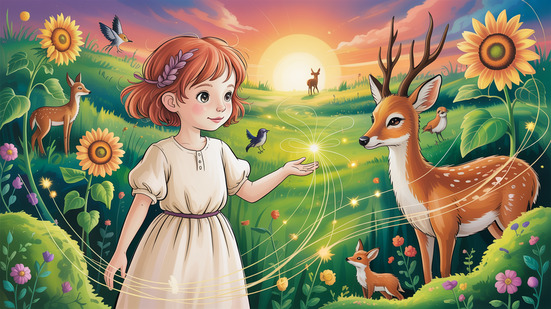 When Sheldrake published his morphogenetic field in his 1981 book The New Science of Life, mainstream scientists were less than thrilled. Some called it pseudoscience; others dismissed it as metaphysical nonsense better left to philosophy than biology. But Sheldrake was not affected. This distrust has motivated him, as polarized creators are inspired by hate.
The allegations are not without logic. According to skeptics, it is difficult or nearly impossible to explain “how” morphogenetic fields physically work. There is no uniform measurement method, no equations that can be scribbled down, and no hard evidence that “comes out” like a “eureka” from a lab experiment. Critics continue to argue that the theory is incomplete due to its reliance on anecdotal frameworks based on empirical observations that lack explanatory mechanisms.
But haven’t revolutionary ideas started the same way? The germ theory of disease or the theory of relativity? Sheldrake’s defenders believe that his theory necessitates a paradigm shift rather than proof in the conventional sense of the term. It may be science a few centuries from now.
The World Changes One Field at a Time
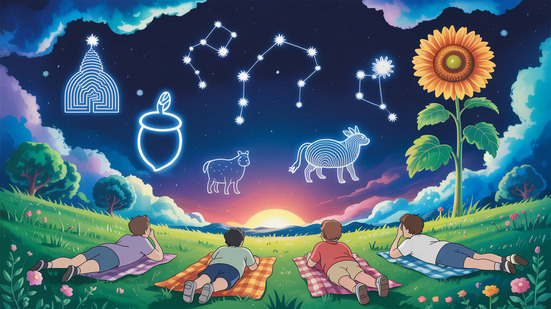 Let’s try a thought experiment. What would happen if Sheldrake were right? What if invisible ripple effects marked everything that happens to all living things? Imagine how different our approach to learning, teaching, and evolving as a species would be.
Think about it for a moment. If skills and behaviors could be “leaked” into our collective memory, wouldn’t it be wise to work in a positive direction? Every time someone “acquires” compassion or creativity, it becomes a little easier for others to do the same. Small ripples create huge waves.
Take the environmental movement as an example. Recycling and sustainability were once considered niche concepts. Today, these ideas are deeply ingrained in many countries, evolving not only through education but also through collective “green” morphogenetic habits.
The Everyday Poem of Connection
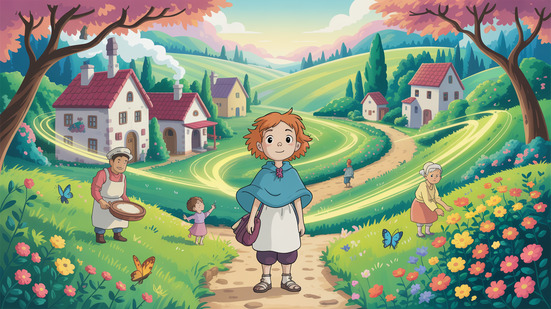 Even if the field of morphogenesis is not firmly established in mainstream science, its ideas are celebrated for their beauty. They speak to the amazing interdependence of life, metaphorically and perhaps literally.
When you walk into a joyous or calm space, you believe that you can detect the “vibe” of that place even before you observe the people who are there. Joy and peace just seem to be hanging in the air for no reason. Nothing is any different when you go out of the room and come back later. You can also see that some traditions seem strangely intuitive, like access to ancient wisdom. Sheldrake may argue that this is where morphogenetic resonance comes into play, bending your intuition to paths already trodden by countless others before you.
Questions about morphogenetic fields are no longer just about science. There is wonder and curiosity, and knowledge is delicately balanced with mystery. What if the memory of everything we do left echoes that resonated with others? Then, every little action we make would reverberate farther than we could ever imagine.
Closing Thoughts
Can we ever clearly judge whether there is a morphogenetic field that connects and guides us along an invisible trajectory of memory through time and history? Not right now (and perhaps not in our lifetimes), but that doesn’t make the idea any less appealing. Sheldrake’s theory forces us to reconsider our role as individuals within the broader micro-macro continuum of life.
This is more a question of legacy. Wouldn’t it make sense to allow our passive, unconscious choices to create an easier, kinder, more innovative world for future generations and to enable them to make the best use of the resources available to them? And the more we choose to learn, love, and grow, the easier it will be for humanity to weave the pieces of knowledge into a vibrant and prosperous quilt.

Leave A Comment