

Resolving Constant Household Friction by Clearing Negative Space Memory

There are houses that appear to be just like any other house and yet you feel compelled to leave the moment you walk through the door. There’s nothing spectacular going on, on the surface. Food cooked, lights on, walls painted in safe beige colors that everyone chooses. But within, there are people fighting with each other over something that doesn’t even make sense. A spoon that was left in the wrong drawer. A person who is too slow to respond to a text message.
As soon as someone enters the room, the temperature changes, and it’s not because of the thermostat. We call it stress. It’s a rough patch. To me that answer always seemed like a cop-out. There’s something more serious afoot. The house remembers. Not in some cute, poetic way. It has a memory structure like that of an empty space with a weight in it. And that little space is typically where the little fights lurk.
The Strange Weight of Empty Places
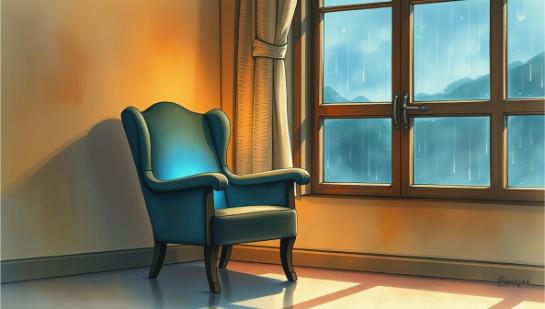
A chair is only a chair when it’s not. After a long period of crying in it after a bad break-up or a job loss, the object becomes heavy. Years later you sit down and feel it in your chest even if you don’t know the story. Rooms are the same. One bedroom is quiet, it’s like your nervous system breathes out. Another makes you feel irritated without being able to give a reason. Nothing is amiss, no loud patterns on the walls. Just pressure.
That pressure is not in the stuff, it’s in the space. Objects can be charged due to what they saw. Empty space contains the form of what has taken place within it. The argument that occurred by the sink every Sunday for 2 years.
The silence that descended upon the dinner table. The hallway where a person took his/her anger at 1 a.m. and went to bed without saying a word. Walls have a lower absorptivity than the air. The air was there when the emotion unfolded. It retains the impression. That’s always been a creepy part for me when I saw it.
I’ve been in so many houses that I believe this now. It’s a feeling you get right away. There are some places that soften you. Others tighten everything. The weird thing is, the visible stuff is so insignificant. I have been in clean rooms, which were still hostile. It’s absorbed before the brain can process it.
Household Friction Is Rarely About the Thing It’s About

It’s not really the wet towels on the bed that are the issue. Or the shoes that were thrown off by the door. Or who it was to wash the dishes. These are only triggers. They run into an old rut in the house’s geography.
The psychology literature is rich with discussions of patterns of interaction between individuals, but few discussions of the need for a place. Memory is geographical. Your body will remember a place more than a date or a logical reason.
As an adult, you enter your childhood home and find yourself racing around at the age of 12. It’s the same in the house you live in now, but it’s quieter and slower.
Emotional moments repeated, form energetic ruts. These ruts turn into automatic responses. Then reactions turn into “this is just the way we do things.” “we always fight in this house” is said as if the house is not a part of the problem. It sounds dramatic, but it’s not until you experience it for a while that you realize. Then it’s mechanical. Brutal and mechanical.
What Is Negative Space Memory, Really?

Not all memories are screams. Some of it is formed in the absence of. The unsaid apology. The sadness that was put on the back burner due to the busyness of everyone. The love that was meant to be, but wasn’t. These unfinished moments don’t disappear. They suspend. A song that is cut off mid-sentence, and continues to play in the background.
A kitchen where the family ceased to eat together after one ugly fight. A bedroom after someone broke someone’s trust. A door that someone always stopped at, before entering the house. Even if they appear to be normal, these spots become charged. People adapt.
They walk around the feeling, but don’t say its name. Until the friction is constant, until they blame the kids, blame the job, blame the kids and the job, blame the relationship, blame the kids and the job and the relationship, until they blame the invisible congestion in the rooms they live in every day.
Clutter is the culprit for all the problems, because it is seen. Purchase some bins, label them, feel good. I’ve seen minimalist homes that were colder and meaner than any cluttered mess, though. With less clutter, the leftover is easier to find. The signal is more distinct. Smooth surfaces and empty spaces. You can’t cover that much weight with a rug or paint it a more attractive color. It doesn’t work.
The Body Notices First
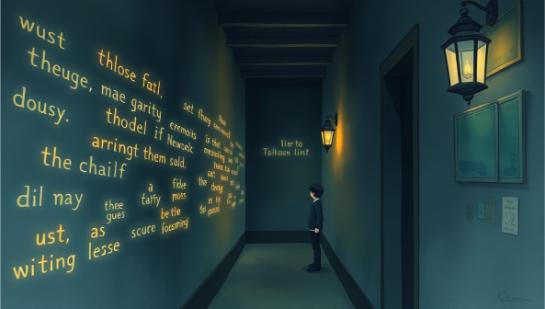
Observe someone entering a charged room. Shoulders go up. Breathing gets shallow. Jaw tightens. They may not be aware of it, but their nervous system is. Then the mind starts talking, she’s being difficult, he’s moody, the kids are too loud today. Occasionally, those explanations are correct. They’re usually just the mind trying to make sense of old tension that was activated by the space.
The majority of home sniping is not actually present moment conflict. It’s historical. Ghosts that people react to, but can’t see. Not ghosts, but unfulfilled emotional structures. The score is maintained by the body and the blueprint is retained by the rooms.
How It Builds in Normal Homes
It’s not typically from a single massive explosion. That would be more easily noticed. It is a repetition of the same thing. The little day-to-day things that accumulate. Dad went to bed at night at dinner time. Mom with resentment that she never expressed. Children learning to shrink to fit in order to not rock the boat. After some time, silence that is violent. These patterns take up residence in the space. Humans forget details. The house doesn’t. It contains the form of what has occurred, and that form is the air you breathe daily.
That’s why a quiet home can be a loud home. The silence begins to bear the weight of all the unsaid.
Clearing It Isn’t Just “Cleansing the Energy”
To me, that was always a pretty expression. Just as you would light a bit of sage and say “that’s it. Sometimes sage helps but real clearing is interruption. You break the continuity of the old pattern. It requires purpose, integrity and showing up. Not performance.
The most difficult is the honesty. You can’t ignore what really went on in that hallway, on that couch, in that kitchen where tension was the background music. Naming it matters. Ignored memory hardens. Recalling memory begins to relax. This was known to old rituals. The act of recognizing changes things.
Clearing Negative Space Memory Is Not “Cleaning Energy”
Start with movement. Stagnant spaces don’t like it. Open every window. Move the furniture around. Switch up the paths around the house. Your body has been following the same routes that have created the old grooves. Disrupt them.
Then bring sound. Not background music. Real, intentional sound. Ring a bell. Clap to the corners. Sing if you like, or say a prayer. It seems like a silly thing to do until you see the air exchange. Density is broken up by sound.
Speak to the room, verbally. Describe what you saw there. Let it know that it’s coming to an end. Let it know what you can’t stand any longer. It’s so uncomfortable! Good. When you’re feeling awkward, you’re most likely telling the truth.
After the disruption, sit in the stillness. Not using a scrollbar on your mobile device. Real quiet. Listen. Feel what’s left. The majority of people rush through this part and ask themselves why nothing seems to stick.
The reasons why some homes push back.
 The people do, so it is because. When the same emotional patterns are continually fed into the space, it refills. Clearing is not a one-shot. It’s maintenance. And some families are casual junkies of the conflict.
Conflict became their means of connection. Peace feels suspicious. Quiet feels unsafe. They push and shove each other only to get back to their comfort zone. Harsh, but true. People connect with one another by repetition, even painful repetition. This is destabilizing to break that loop. It’s a must-have, but it makes everyone shake.
Forgiveness actually changes rooms!
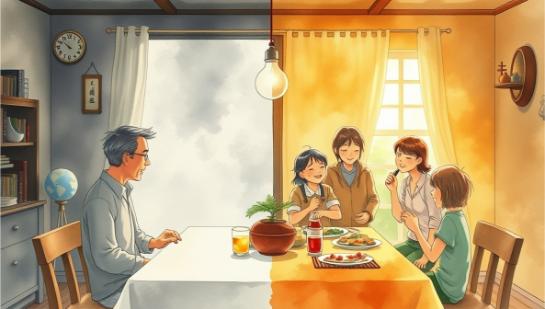
We think of forgiveness as something that happens in our heart. A good idea that you came up with. But real forgiveness, forgiveness that doesn’t do anything, changes the environment. The air becomes lighter. The grip of tension is released. It’s a sensation you experience in your body. The dining table following a true reconciliation doesn’t feel the same as the dining table before the reconciliation. The same wood, the other field around it.
Once people have been living in your home, it is not neutral. It turns into a living record of all that has occurred there. That’s not metaphor. It’s the way it works.
The process of creating something new on purpose.
It is not sufficient to remove the old residues. Vacuum is always filled. The old patterns come back if you don’t put something in their place, familiarity is comfortable. So you deliberately rebuild. Have meals together instead of where fights used to occur. Laugh in rooms where grief was. Sit quietly in corners that felt sharp. Touch the walls. Lie on the floor. Be here for a reason.
It’s not glamorous. No fireworks. Do conscious repetition of inhabiting. Gradually the house transforms. One day you see the same place that was pushing you out now you can breathe out. It’s not perfect. Occasionally, people snap. Socks still end up where they don’t belong. Life keeps happening.

Leave A Comment