

The Metaphysics of Intention: The “Observer Effect” in Healing

A cut on your finger heals itself. A broken bone will heal without permission. Cells that have never met, somehow know their jobs. We add the word “biology” to it and go on, as if that makes any sense. But hold it for a while and everything begins to feel off. Too coordinated. Too responsive. As if someone is listening.
A body is not a machine like I’ve ever seen. Machines don’t rewrite their blueprints when you’re stressed or hopeful. They don’t slow down when you’re heartbroken, they don’t speed up when you feel understood. But we walk around in these systems, which change and evolve as we change and evolve. That’s where intention goes in. The quiet, metaphysical type that makes you think, is there any awareness in the mechanism?
The Problem Nobody Likes to Admit

We have to deal with this division in our minds. The textbooks tell us that matter is first, brains make thoughts, chemistry makes feelings, the physical world runs the show. On paper it’s fair enough. But then reality sets in.
When bad news comes, your stomach goes to stone. You fall in love with someone and one day your skin feels different, your sleep is different, your energy is different. An athlete visualizes the perfect shot in his mind many times and on game day, the body does it. A patient takes a sugar pill and the pain goes away.
The placebo effect is like an uncomfortable family member at the dinner table in the medical literature. It’s a fact that everyone knows. It causes measurable changes, such as hormone changes, immune responses, tissue repair.
A belief is a thing that is believed. Not symbolically. Literally. An expectation or a conviction cannot be bottled or weighed but they push molecules around. That ought to shake people up more than it does. It’s a hole in the materialist narrative that we tend to fill with nice words and get on with our lives.
I have seen it up close in little ways. A friend believed the new treatment would work and her labs got better before anyone could find a mechanism. Another guy remained ill, in part, I think, because he was the “guy with the condition” in every room he went into. There was no separation between mind and body.
The Observer Effect

The Observer Effect is a term that has been used in various ways.
The term “observer effect” is used a lot these days. The physics version is more narrow: If you measure something at the quantum level, it changes. Fine. But the itch is older than any lab, though. If you look at something does it change what it is? Is consciousness a passive camera or does it affect the scene?
Ancient thinkers had to struggle with this without particle accelerators. Some traditions claimed that consciousness is the foundation of all the other. Others said that reality is what comes into being along with the one who experiences it. Different languages, different times, same hunch: the world may not be separate from awareness as we think.
In healing, this happens instantly. You don’t simply see your body heal. You’re in the mix. They don’t stand outside the process, they are part of the process. They appear to be leaning in.
Intention is not wishful thinking

This is where things get sloppy. There is a confusion between desire and intention. Desire can be wild, riddled with uncertainties and gaps. Real intent is different. Cleaner. All of your parts finally decided on a direction, just like all of them.
I have met people who were not exactly jolly optimists, but who had this unrushed attitude. They did not have their thoughts, feelings and actions in conflict with one another. It wasn’t magic. It was coherence. That’s the body’s preferred state.
Civil wars within the body are costly in terms of energy. Systems function better when there is no longer a conflict between the signals. Intention could be more about preventing self-sabotage than about forcing things to happen. A more functional and subdued concept, and one that I’ve seen.
The Body Seems to Be Listening
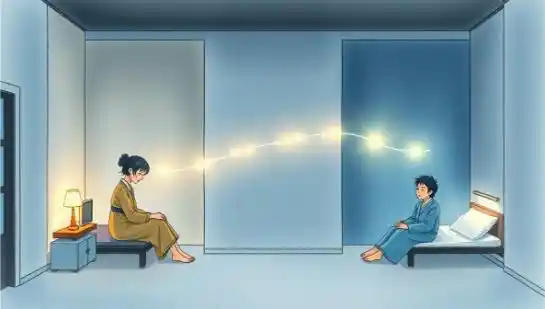
The awkward thing is that it appears to hear a lot. Not your scripted affirmations or happy affirmations. Deeper stuff. The beliefs you live by. Who you are as a person. The emotional climate you carry around with you.
I recall one person whose sickness had turned into their character. All discussions focused on symptoms and restrictions. Their relationships, their schedule, their sense of self, all centered around being sick. Fear appeared right next to the relief when real improvement began.
What would they be if they didn’t struggle? Healing said to them, “Become something new, and the old self said no. At that moment I realized that healing was not simply a matter of repairing cells. It’s a change in address in who you are.
The Metaphysics of Participation
Western ways enjoy making distinctions. Subject over here, object over there. Observer is not the observed. Clean categories. They continue to get smudged by reality.
Life is more like a dance that you can’t sit out. Your attitude affects the atmosphere. The room is a mood changer. Thoughts and feelings spiral around and around one another, and it’s difficult to determine where one began and where the other ended. Healing is similar. Intention is not a laser beam shot at your symptoms. It’s more of a gardening thing, preparing the soil, pulling the weeds, making conditions that allow some things to grow and others to not grow.
You participate. You don’t rule from afar. The difference matters.
Why Ancient Healing Traditions paid attention to Consciousness
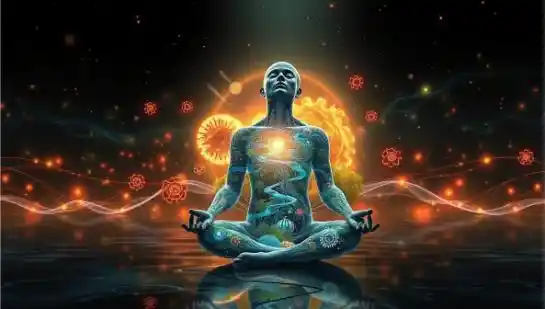 Enter a familiar ritual and it appears to be a show to the eyes of the new. Symbols, chants, sacred spaces, candles. Easy to dismiss. However, they were engineering their minds on purpose. Focusing scattered attention. Building shared expectation. Aligning the whole person with thoughts, feelings, body, community.
Modern medicine is awesome at what it does. Trauma care, infections, surgery and these are true miracles.
However, at times it acts like a broken appliance. Healing was often seen as a change in relationship in ancient times. To pain. To self. To the larger world. We may have discarded some valuable ancient wisdom in our decision to count only the measurable.
The Strange Power of Expectation
The place of expectation is a strange one. It’s not hard, but it changes your physiology in seconds. When you enter into a conversation with the idea of a fight in mind, your shoulders tighten, your breath shifts, your mind looks for threats. Walk relaxed and open and the whole body state changes. The room remained the same. You did. And, since you did, the encounter goes differently.
The rules of illness and recovery are the same. Diseases are real. Pain is real. However, the body does not react in a set manner to them. How the physical drama unfolds is influenced by the frameworks we bring: fear, resignation, curiosity, determination. It’s not everything. But, it’s not nothing.
Consciousness as Field not Object

Other older traditions do not consider awareness to be a byproduct of the brain, but rather a basic reality of the world. Not something within you, but something you’re in. If it’s even half correct, intention becomes more of a shaping force than a cute side effect.
I don’t believe the one in which thoughts magically rewrite physics. That’s not the life that will stand up to the resistance. Bones break. Cells mutate. Accidents happen. But the other side, that consciousness has nothing to do with healing, sounds equally far-fetched after seeing enough real stories. There are too many oddities. Many examples of inner attitude that seems to tip the scales.
The danger of going too far with the intention
This notion draws in the same kind of garbage that a porch light does. Some people choose to believe that all sickness is a result of negative thoughts. That’s not insight. It’s the cruellest form of spirituality. Children do not express cancer with wrongful beliefs. Accidents are not wishes. There is real randomness and factors in life that we can’t control.
It’s not about who’s to blame. It’s noticing influence. It’s not about pretending to be the only one who is doing it. Maturity is the ability to embrace two truths: your awareness is important, and it’s not the only thing that is.
Where the Mystery Remains
The more I contemplate this, the less I believe in neat conclusions. Healing maintains its edges. When hope comes, something changes. When meaning realigns. When the will ceases to oppose itself. We glimpse in labs and stories, but it’s not quite there.
Perhaps it is a space for metaphysics, not science, but questions that are better. The observer effect in healing is likely to involve biology, psychology, expectation, identity, and other entities that we haven’t yet named. The mystery doesn’t feel like failure. It’s like an invitation.
We’re so used to being treated as passengers in a mechanical universe. What if one of the subtle influences on the ride is awareness?

Leave A Comment