

Lessons Learned From “When Breath Becomes Air” By Paul Kalanithi
 If you knew you had only a short time left to breathe in this world, how would you spend it? What would worry you most? What choices would be considered “energy-using”? That was the decision given to Paul Kalanithi, a gifted neurosurgeon diagnosed with terminal lung cancer at age 36.
When Breath Becomes Air is Paul’s nonfiction book. But when you get to the scene where he sits down to write, it becomes clear how much he wanted to show us. He is the late Paul, who knew how to write, and he is also the novelist Paul, who should have been a novelist because the style is a way of showing the reality of what the dead Paul knew and what he could do as a novelist.
I found that his experiences were not so much about my empathy as about the wisdom he gained from them. In this article, I want to share some crucial lessons from Paul’s life. I pray that these truths will seep into you soul as they have into mine.
Lesson 1: It is more important to find meaning in life than not to die.
 Paul had dreamed of becoming a doctor from the beginning, but in college, he was an avid reader and was fascinated by the ideas conveyed through art. He focused on one central question: Why is human life meaningful? He read authors like Tolstoy to find meaning as a human being, and eventually found meaning in medicine, especially in the brain.
In this memoir, in one chapter of his book that particularly gave me goosebumps, Paul (now a neurosurgeon) describes his surgery, in which he opens up and penetrates a patient’s brain. He shares the surreal experience of touching the brain, which is believed to be the foundation of human memory and humanity. He poetically adds, “The brain is the foundation of human identity, and I treated it as if it were another organ.”
I learned that lesson perfectly. If you live to avoid death, life itself is not worth living. Paul’s case reminds us that, as Einstein said, “What counts in life is not simply that we have lived, but what difference we have made in the lives of others, and that will determine the meaning of our lives.” And that significance is not determined by how long we live but by how dedicated we are to it.
Lesson 2: The Power of Telehealth Visits
Paul provided ongoing care to patients through telehealth sessions during his residency. During medical school, he learned to pay attention to language. He healed both body and mind, and as a result, he healed more fundamentally. He also knew that we all dream, fear, and interact socially. He talked about a patient named Jeff who was in a car accident and couldn’t move his legs. He took care of Jeff and his family even with his health problems. He talked to his patients and helped them think about what was wrong.
Paul saw that some doctors were straightforward with him and looked him in the face, while others seemed to avoid his gaze for some reason. He could tell the difference between doctors who had always looked at that bald head and those who now did so with both hope and fear in their eyes.
This story suggests how people are increasingly conscious of another person’s physical, emotional and inner requirements. This awareness makes it harder and excruciatingly hard to focus on anything; not even on very simple tasks.
Lesson 3: Remember that time is precious only when it is short
 Paul became ill during his grueling work as a neurosurgeon. Exhausted, sleep-deprived, and unable to sleep at night after a 16-hour operation, he was left to reflect. However, as is familiar with people who suffer from extreme burnout, Paul had difficulty spending time with his wife, Lucy. They always planned to have children “someday,” when they were ready, when they no longer had a dream job.
But cancer changed the course of his life. Paul remembers studying cancer statistics with Lucy, trying to calculate what life would be like in two or five years, and wondering if he would ever be a father.
The most heartbreaking aspect of the book comes when Paul and Lucy intentionally increase their chances of having a child, only for the daughter to be born into a world with a father who will never know her as she grows up. Paul shares his love and happiness when he hugs his daughter for those brief moments.
This is a difficult lesson because tomorrow is not guaranteed for anyone, regardless of their condition. Our hopes, fears, plans, ambitions, and things we love or dislike don’t wait for us.
Lesson 4: A fluid being, not a fixed identity
There was no turning back once Paul was diagnosed with cancer. In an instant, he went from brilliant neurosurgeon to patient. He had performed highly complex brain operations there, but now it was nothing more than a place to see, be prodded, and poked at. One of the most memorable experiences for Paul was having that doctor, as he sat by the bed where Paul was undergoing cancer treatment, ask how things were proceeding. Paul replied, “I’m a neurosurgeon.” It was not something he had ever said before. It was hard to put into words.
Paul’s ability to adapt rather than stubbornly resist was the most fascinating part of his story. He never stopped, never stopped exploring new alternatives. When he could no longer work as a surgeon, he turned to writing; when he could no longer plan for the following decades, he planned for the next good day.
This illustrates how even the raw experience of human life can be transformed into abstract categories that distort our way of being. The truth is that the difficult moments life presents us are precisely those that force us to reimagine ourselves and learn to appreciate the life we have in alternative ways.
Lesson 5: The Task of Literature in Understanding Meaning
Paul never lost his love of literature. A family doctor, he enjoyed reading until his death at the age of 37. Reading, in particular, helped him make sense of his life experiences, both as a doctor and as a patient. It was in reading that he found meaning and insight into medical difficulties that would otherwise go unnoticed.
The death of a child, as seen during medical training, is traumatic in itself. One of the most effective ways to cope with grief and loss is through writing and reading. Over the years, Paul has also read Solzhenitsyn because he feels some resemblance to his own sadness and despair.
Lesson 6: Power is a function of struggle
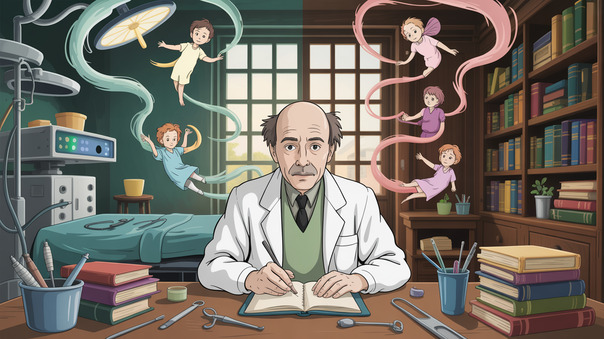 Paul doesn’t shy away from the grimness of cancer treatment or the challenges of neurosurgery residency. He describes working 36 hours straight under severe ethical restrictions and the unbearable emotional weight of holding life and death in his hands.
One of my all-time favorites I’ve heard is about Paul’s botched surgery during his residency. The patient suffered only minor injuries, but it left Paul in terrible shock. At night, after surgery, the patient’s head hurt more than her feet. She couldn’t even feel her feet hurt.
When Paul talks about what he went through after cancer treatment, such as the extreme pain and exhaustion from the treatment, you might think that you, too, will soon be in a lot of pain. But he understood this as a sign of his love for his daughter (“every breath hurt”) and ultimately as a sign of his love for everyone else.
Stressful times can do more than pleasure. We move faster through frustration than when things are going smoothly.
Lesson 7: It is not Death that we fear, but life
For a neurosurgeon, death was just another challenge. Paul had to tell his family that their loved one would not survive, and he had to weigh the possible benefits and possible harm of surgery. But it was only after facing death that he genuinely felt the weight it had on his life.
“Death is scary,” he says. But it shouldn’t be that way.
Paul didn’t put the subject of death in a box or linger on it all the while, though he might have liked to. It was just wishful thinking. He didn’t have time to think about death that way.
He wrote a book. He became a father. This suggests that death is not necessarily a sad or morbid experience. Or it can help us become more aware of the issues that matter and challenge us to live as our most authentic selves.
Lesson 8: Who You Know Matters
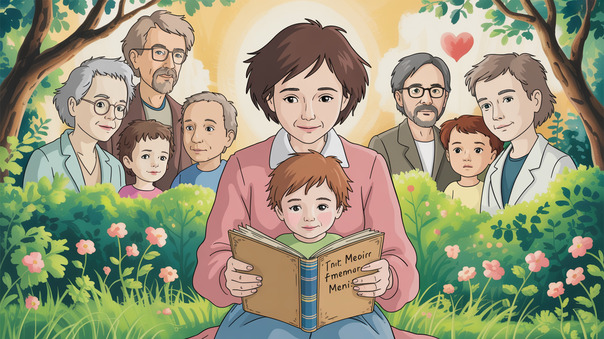 The main themes of this book are the relationships between Paul and Lucy, Paul and his parents, Paul and his siblings, his mentors and employers, and his patients.
Paul had to quit his job because he was so sick. It was then that he realized that many of his relationships were superficial, because what he had was enough to become a doctor. He said that successful doctors must learn to communicate with others in a more intimate and diverse way, and that the way they communicate should be natural to their needs, not in a way that is in line with their nature.
A former mentor shares the news of his illness with Paul, and Paul recalls the times when they would share thoughts on philosophy and literature. It’s a moment when, for a while at least, his heart and mind, not his cancer, make him who he is.
It’s a reminder of what’s truly important in life: not what we do, but the people we love and who love us.
Lesson 9: Honesty is not contradictory to hope
Paul, both patient and doctor, had his indicator of when hope became a reality: his cancer statistics. Like anyone else, he knew that a cancer diagnosis was not good news.
Paul describes his “emergency plan” this way: “If I had two years left, I would write every moment. If I survived another five years, I would be back in the operating room part-time. If I could hang on a little longer, I would see my daughter as an adult.” In his mind, this logic allowed him to hope without ignoring the facts.
Paul was swimming in the frozen lake next to his house. He was still shivering, but the cold water against his heels and the mountains around him made him strong. He didn’t know if he would go faster or slower. He gritted his teeth… He didn’t think swimming would cure his cancer, but he was attracted to the idea of living true to himself after death.
That’s right. And it’s not just about hoping that the future will go a certain way. Hope is about finding happiness and (sometimes) escaping from a complicated world.
Lesson 10: Legacy is how you make others feel
Paul realized that he would never see his daughter grow or his book published. Regardless of the pain that was pressing like a pillar on his chest and that made breathing difficult, his health worsening, Paul kept composing the story of his life as he had always wanted to, ever since childhood, because deep down in his heart, he believed that this would help someone else. He thought about how his life story might be a help to people whom he would never meet, even during the last weeks of his life.
We need not have precious dates in our life handed down to us and engraved in everlasting memory. We just need to leave behind good memories. We leave behind blessings. For in ways unknown even to ourselves we have shaped the lives of others with our touch.
Conclusion
Kalanithi’s wife Lucy published his unfinished novel When Breath Becomes Air on January 19, 2015, his 37th birthday. Since then, his writings have reached millions of readers around the world.
What is this “extensive and focused account of how to live our short lives” that Paul speaks of? A life filled with wonder, curiosity, and empathy.
“We must live authentic lives,” Paul always said, when life changes too quickly, when we are too busy with work, or when we do not want to face the real work.
Paul always said, “Mercy always triumphs over judgment,” which is also what Jesus said. His teachings remind us that there is still a particular kind of human compassion, intellectual honesty, and respect for uncertainty whether religious or not that we desperately need.
He breaths air, but the breath from his mouth is like burning fire, and from his lips flows undying wisdom, giving us meaning of our short life.

Leave A Comment