

Taoism: A Way of Growing Spiritual Development, Harmony, and Prosperity
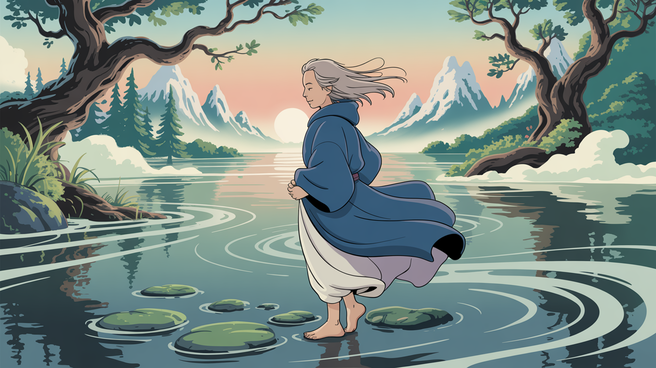 Look at the water, flowing through a small hole and back into the main stream. The water doesn’t struggle, it just flows. This is very similar to Taoism. Taoism asks us to live in harmony with the ups and downs of nature. What I have said is like a leaf floating on water, flowing with the current. There are no shortcuts in Taoist teachings, but it is worth looking at what the Taoist river looks like in this article. It is so long that the end is not yet in sight.
What does the term “Taoism” mean?
Taoism is a spiritual perspective that originated in ancient China. Throughout the history of Taoism, there have always been attempts to maintain balance between humans and nature, humans and others. The word for Tao in Taoism is pronounced the same as the English word ‘dow’. You may be wondering what this “Tao” is. Let me give you an analogy. Taoism is not simple and doesn’t provide a set of steps to follow. Imagine the wind. It exists, moves, and guides, but it’s almost impossible to catch. The same is true in Taoism.
In Taoism, strict rules are not allowed, but there is freedom to adapt to the unique rhythms and cycles of life. Rather than imposing our rhythm, we have the freedom to “dance” to the rhythm of the universe. Is this “giving up on life”? Doesn’t it make you want to take a deep breath?
Yin and Yang: Two Peas in a Cosmic Pod
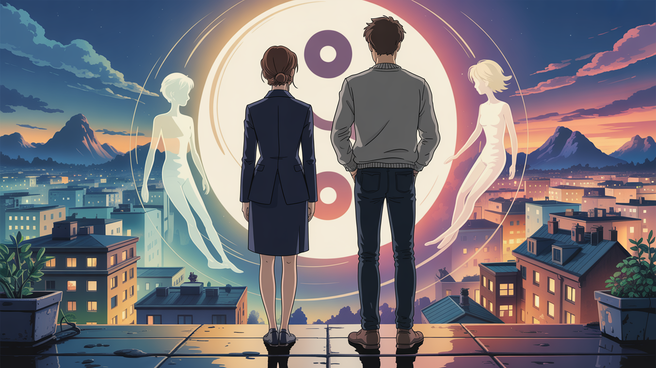 The black and white vortex of yin and yang is the ocean of thought in the Taoist world. These two represent what we usually think of as opposites, but in reality, they complement each other out of practical necessity. Examples include the sun and the moon, light and darkness, and Tai Chi.
“But doesn’t light defeat darkness?” you may ask. Taoism does not believe in such a thing. In Taoism, the two opposing pairs do not destroy each other like good and evil, but rather complement each other. In life, you can find sweetness and sourness. Rest is another example. You cannot simply stand still, but everything must happen at the right time. There is no room to let go and give up. It is like holding hands. Life is like rhythm. The two are balanced.
The idea of yin and yang is that good and bad things balance out like the two pans of a scale. Every downswing will come with an upswing, and the cycle goes on round and round. Are you feeling depressed? That is part of yin. If you smile the next day at a funny meme, that is yang, counteracting depression. The rhythm of all existence transcends the mundane.
Wuwei: The Art of Inaction
 Wuwei, often translated as “inaction,” is perhaps the most arcane and sometimes mysterious concept in Taoism. It may sound interesting, but it should not be mistaken for laziness. Inaction is voluntary action.
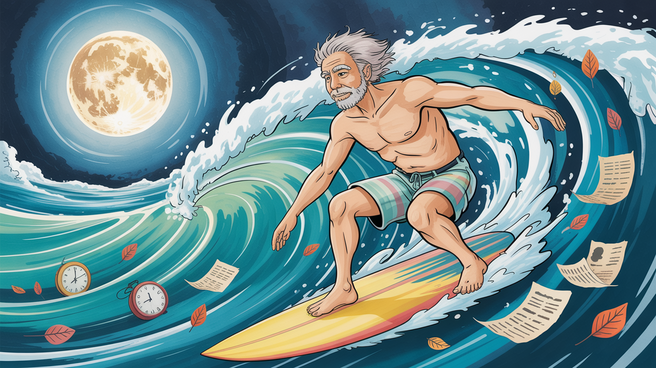
Imagine a surfer skillfully surfing the waves. His movements are not a fight against the ocean or an attempt to move forward. Instead, he surrenders to the energy of the wave. That is inaction. It is not a fight against the life force but a surrender to its power. Practicing inaction (無爲) does not mean sitting on the couch—quite the opposite. The key to inaction is timing. It is essential to know when to let go and when to step back.
Remember when you sometimes get everything in life at once. Solving problems became easier, studying for tests became easier, and you get (excellent) grades. You even cook flawlessly. Did you think it was possible to feel difficult? Everything was left to chance, and you did nothing. Every time the local water supply was polluted, we had to wait until it cleared up.
Taoist Living in Modern Society
You might be thinking, “Is this true for me? Life isn’t always about free flow and gentle waves.” While this is a valid perspective, mainstream Taoism today can feel like a roller coaster compared to the calm river flow mentioned above. Another conception easier to understand is that there are many different ways to look at things. By the way, when was the last time you were thankful and grateful for little happiness? The sound of raindrops on the roof, the sun warming your face after a night in an unheated bed, the much-needed smell of coffee today: all these are gifts from Heaven. Taoism teaches us to enjoy the small, quiet things that we miss in our busy lives based on this idea.
It’s so deep that we don’t have time to think about it. Almost everyone knows the saying, “Don’t sweat the small stuff.” This is basically the Taoist practice. We become so focused on planning and action that even thinking becomes more chaotic than necessary.
Life’s problems are like a ball of thread with a fatal knot in it. If you force it, it will only be worse. If you caress it slowly and use some patience, you can untangle the large knot, which will make it into an elegant ball again. The Taoist way of living enunciates that stress should be dealt with lightly, gently, and kindly.
Nature, the Ultimate Teacher
 Taoism sees nature not as something to be conquered but as a world full of wisdom.
Trees do not grow so complexly, so they focus on growing upward. Birds sing freely without any set time. Adults whisper the same message to us: “Just breathe calmly and see where life takes you.”
Think of gardening. You can till the soil, but you can’t make the sunlight shine brighter or make a seed sprout overnight. Coexistence, much like in a garden, means giving things time and space to grow without any external intervention.
Observe how the seasons unfold without rushing. For example, winter refuses to give way to spring. Both resonate with rhythm and pace. Taoism tells us that we are no different from the seasons. We thrive, rest, and even celebrate through similar cycles of growth.
Taoist Spiritual Growth
One of the hallmarks of Taoist spiritual growth is that it does not seek perfection or enlightenment. It does not climb an abstract ladder. The self becomes accustomed to the Tao. Meditation, self-reflection, and the art of living are all part of a Taoist existence.
The interesting thing about all this is that it is not found in the scriptures. There is no set “end point” for practice or achievement. You can grow spiritually by sitting quietly for five minutes or getting up from your desk and taking a walk without your phone. Taoism prefers to focus on the present rather than doing more.
Taoism is enjoyable. While other philosophies have guidelines and rules, Taoism has no boundaries. Lacking rigid notions of “should” or “ought,” it offers working principles and allows each individual to decide for themselves. It’s like giving them a compass instead of a detailed map.
This kind of freedom can be truly liberating. In this case, it means you don’t have to be perfect. It’s a typical fallacy. What does “knowing it all” mean? Life is a mystery to be lived, not a problem to be solved. Furthermore, Taoism teaches us that it’s okay to fall, to take a step back, or to take another path.
For Those Seeking to Understand Taoism: Advice to the Wise
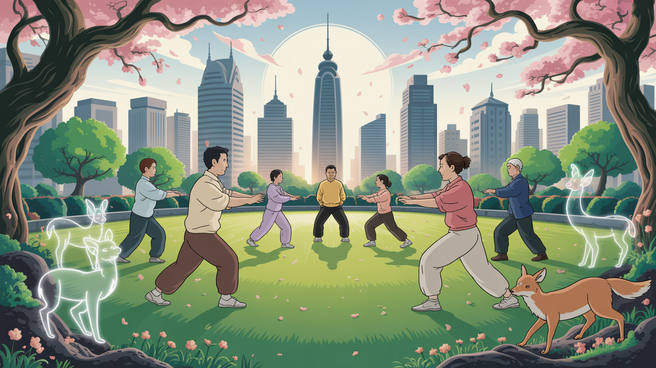 You and nature are one. Watch a tree swaying in the wind for five minutes. Only then will you understand the pure peace that comes from existence. This is a lesson that all of us, as Taoists, can learn.
Silence is deafening. The “music” of everyday life is made up of many sounds, but emptiness and silence must fill its place.
Don’t push yourself too hard. Whether it’s a relationship, an expectation, or a goal, taking it slow can be very helpful. In most cases, less effort will get you closer to the result.
Quiet moments are essential. Not every moment has to be exciting. Sometimes, the calm, dark moments are the most important.
Bringing It All Together
Taoism isn’t about chasing life, but rather about clinging to it with a limited vision. The natural path isn’t about forcing oneself, but rather letting go. Taoism gently guides us toward the harmony that transcends us. It makes us understand that living in a naturalistic environment is the only solution for all of humanity.
The most beautiful thing about life is that it is always uncertain. That’s why Taoism isn’t a religion that radically changes life. It gently guides us to balance everything and return to our home. If only we were all that lucky!

Leave A Comment