

Grounding Techniques for Empaths and Sensitive Individuals
Have you ever wondered why certain individuals seem to absorb every breath, mood, and tremor that surrounds them? Being in the midst of the winds of the world’s chaos, for example, feels like being in a storm without an umbrella for sensitive souls and empaths.
 It can bring up feelings that one has never experienced before. However, it is not entirely negative. Being aware of everything allows you to appreciate what most people tend to ignore and, in this case, helps you sense other people’s issues and problems even when they are quite about them. In general, too much sensitivity may also lead one to feel more stressed, confused, and even exhausted.
As for the former, grounding is like putting on your sneakers before running a wild, emotional marathon. It shows you where you end and everything else begins, makes sure you do not start tripping over the world and keeps you stable. In this case, here are some useful grounding techniques for empaths and sensitive people.
Let me tell you about my friend Lina
Let me tell you about my friend Lina. She is a singer. She genuinely admires the intricate beauty found in even the most damaged items, like a rain-soaked sidewalk or a soda can. But Lina’s sensitivity goes beyond just her appreciation of beauty. She once told me that attending a crowded art opening caused her so much distress that she sobbed in the parking lot for an hour. For her, being surrounded by other people was too much. She described herself as a sponge in a puddle. She absorbed everything in the room like a sponge. She later appreciated the ability to be present.
Therefore, Lina needed specific strategies to help her manage and contain her emotions and stay in the present instead of just waiting for time to heal. This post talks about some of those strategies.
How does one get “grounded”?
Picture a tree swaying in the valley. Imagine the tree, its limbs swaying in the gentle breeze while its roots remain grounded. There is resistance to the energy pull of any external energy that’s surrounding it. This principle goes with grounding, too. The urge to anchor oneself physically, emotionally, and psychologically helps to resist the influence of external energy.
Through grounding, one is able to shift from feeling the high of being a steady oak tree and decide if it needs grounding while feeling like an autumn leaf blown around.
Why should one be grounded?
Imagine entering a room filled with unhappy people. Indeed, there is some level of distress around the room—some people are mildly sad, while others are furious. If you lack self-grounding, disregarding someone else’s issues will become impossible. You suddenly find yourself absentmindedly taking the load off someone else’s problems. Well, that’s quite the load to carry. It is exhausting.
Self-grounding enables differentiating between owned and unowned energy. That is similar to making a circle in sand around yourself and saying, ”I am here; this is not me.”
Given all else, the ‘why’ is now clear.
Sensory Grounding Techniques
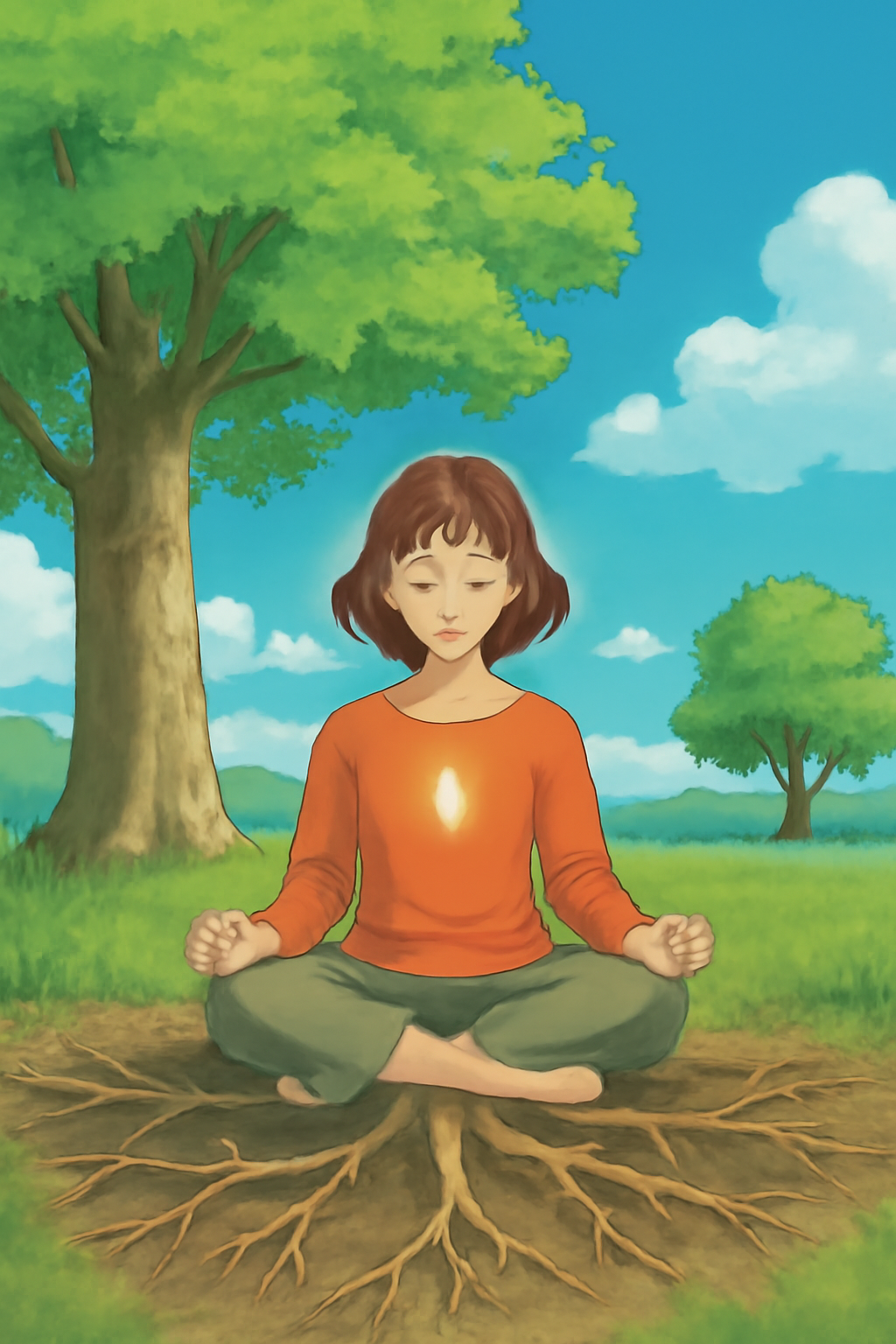
1. Walking barefoot on the ground is one of the sensory grounding techniques.
Pretty low-tech, don’t you think? It is important to back up our claim. Let’s take the example of ‘sticking our feet in the grass’. ‘Earthing,’ which is ‘walking with bare feet on the soil, sand, or grass,’ is not just an activity done as a hobby; but it is scientifically proven to help in balancing the body’s energy levels.
My neighbor Sam is on board. Every morning, he claimed, “I walk barefoot in my yard just so I can feel the dew on the grass.” He views it as ‘nature’s coffee.’ Why, indeed, would anyone turn to caffeinated coffee when a stroll around the yard has the same energizing effect?
Why does this work? Your feet touching the ground gives you the help needed to be psychologically present. Paying attention to the smell of the ground when it is wet would also catch our attention. Normally, these tiny things do not catch our attention.
2. Use all five senses.
Connecting with your environment is an easy way to ground yourself. Consider each of your senses right now. What can you see? Listen? Feel? Smell? How about taste?
Even if you close your eyes for a second, you can still hear leaves falling in the park while the wind tickles your skin. Every breath you take tastes fresh. This kind of thinking gives your mind a chance to realize that it’s active and aware of the present, right here, right now.
One strategy is to keep handy something tactile, like a stone or a keychain made of leather. The sense of touch can help you return to the present awareness.
Grounding techniques that rely on movement
1. Shake it off.
Have you ever seen a fearful dog trying to shake off water? Next time, if it gets a bit warmer outside, try it with your own body! This method helps reset the nervous system. Pretty useful, huh?
This applies to humans, too, as we all love a good shake! Alright, so liberally swing your arms and stomp your feet. It’s a great way to get rid of that pent-up energy..
2. Dance with high energy.
Yes, I am serious. Listen to anything you like, even that irritatingly catchy pop tune that you act like you don’t know. Dance, twirl, bounce, and do whatever you want; it’s liberating. Think about how liberating it’d feel to declutter emotions from your day the way one would shake the dirt off a carpet.
Some time ago, I entered my living room and discovered my wife dancing around the kitchen to 80s rock music while ‘singing’ into a spatula. We both ended up laughing. Guess what? At that point, she had such contagious positive vibes.
Techniques with our eyes and the mind
1. Visualize a Tree
Going back to the tree metaphor, close your eyes and picture yourself as a gigantic redwood or oak tree. Picture your roots drawing up from deep within, within calm and nurturing, soothing energy. Imagine that your arms are ridding the air of tension by stretching high toward the heavens.
Whenever ideas or emotions overwhelm you, visualize yourself in a tightly sealed, safe box. You can decorate the outside as you please, like a jail or a box. The point is to surround yourself.
Picture yourself as a tree in a stormy night. Grant yourself the ability to withstand anything, even chaos.
Start by saying, “That’s for next time.” After uttering this phrase, try telling yourself, “My only task here is to keep my thoughts aside, not deal with it right now, so that I am not emotionally overwhelmed.” Often, your feelings are kept away until you have the energy and the mind space to deal with them.
Self-Guided Meditation
For this meditation, first of all, turn your phones off and let’s observe a moment of silence.
Try this example:
Keep your phone on your bedside table. Start telling yourself. “What doesn’t belong to me goes back to where it has came from.” In short, try to not think anything. Simply plan your next day to keep your mind busy.
And then suddenly, poof, boom, you start to feel more relaxed. Tell yourself, ‘I am relaxed, and I will carry this throughout the day.
This is about feeling safe. An empath is not required to undergo a rigorous emotional training program. You don’t need to answer every desperate help request, attend a loud party, or binge-watch Netflix’s intense dramas. Recognizing your boundaries will help in managing and preserving your energy.
It’s the same as having an emotional budget. So, spend wisely.
If nothing else works, reach out.
Grounding alone can be insufficient, but that’s just fine. Speak with someone who understands you. Process your experience together. Saying something like, “I’m feeling all over the place and don’t know what to do,” can actually clarify one’s thoughts.
Once I reached out to a friend of mine regarding the same. He once joked, “grounding isn’t always glamorous, 2 a.m. pizza can be a wonderful crying spot.” Let’s be honest; he isn’t wrong.
Conclusion
Using grounding techniques isn’t solely for empaths or those sensitive to energies. While you may need to experiment to discover what is effective for you, having the right tools ensures life is less complicated.
Do you recall Lina, the singer who got way too anxious? In fact, these days, she draws inspiration from low-fidelity jazz and paints while sitting at home. She says, ‘yeah, the world is still noisy but I’m not obligated to carry their burden.”
Neither do you. You can pick up your balance by walking barefoot in the grass, dancing like a wild child, or breathing deeply. This practice is called “grounding.” Say this to yourself over and over, “This is me, and I am enough,”.
Remove your anchors, dear friend. As a matter of fact, you are more than capable of doing this.

Leave A Comment