

Automatic Writing: Channeling Higher Wisdom and Insights
 Have you ever seen your hand move across paper, writing words that you did not think about? That’s automatic writing. Some folks think it’s a gateway to profound understanding. Others reckon it’s nothing more than your subconscious mind chattering away.
Either way, it’s fascinating.
This practice has captured the hearts of the world for centuries. Mystics, spiritualists have even turned to it, including famous authors who have dabbled in this practice. They say that it opens up hidden chambers of consciousness. Whether you are spiritually inclined or simply curious about what lies in the mysterious depths of your psyche, automatic writing is an intriguing expedition into the unknown territories of your mind.
What Is Automated Writing Exactly?
 Picture this: You’re holding a pen, your mind willfully blank. Your hand begins moving. Words emerge. Sentences materialize. Yet you’re not really in control of anything.
That’s automatic writing at its best.
The concept is that of bypassing your ordinary thinking patterns, that incessant mental commentary we all possess. Instead you allow something else to communicate through you. Spiritual practitioners may refer to this as a “higher self” or “spirit guide.” Psychologists would likely refer to it as your subconsciousness.
It’s like becoming a vessel. A conduit, if you will.
The practice doesn’t require fancy gadgets and special training. Just some writing implements, some parchment (a keyboard) and an inclination to give up control. Simple, right? Well, the mechanics of it are pretty simple. The experience itself can be extremely bewildering.
Some people claim to have received messages from deceased relatives. Others claim access to ancient knowledge or futuristic knowledge. A few just discover their genuine thoughts emerging finally without censorship.
History of Automatic Writing
This phenomenon isn’t some modern day fad.
Automatic writing became extremely popular during the Spiritualism movement of the nineteenth century. Mediums would supposedly convey departed souls, recording their communications. Séances turned into social events in which the living talked to the dead via scribbled messages.
Victorian parlors were filled with this activity. Even distinguished people, participated enthusiastically.
The poet William Butler Yeats wrote much about automatic writing. His spouse, Georgie Hyde-Lees, would fall into trance states and write down passages of a cryptic nature. Yeats believed that these transmissions came from supernatural entities. He used these mysterious revelations in his literary creations.
The renowned psychologist Carl Jung researched this practice as well. He didn’t necessarily blame it on spectral beings though. Jung experienced it as a means of tapping into the type of thing we now call the collective unconscious; that accumulation of psychological knowledge that is shared across the human race.
Throughout the ages, countless artists and thinkers have used automatic writing as a creative tool. The Surrealists adored it. They saw it as the act of freeing up the imagination from rational shackles. The Surrealist manifesto author Andre Breton promoted it as true artistic expression.
How Does This Mysterious Process Work?
 Nobody understands it all. From a spiritual perspective automatic writing creates connection with elevated consciousness. Maybe your higher self. Perhaps guardian angels or spirits of ancestors. The idea is that these things know more than you, or in some sense, are aware of, and are itching to tell you what to do. You become their medium.
The psychological interpretation is considerably different. Your subconscious mind is constantly processing information – things you’ve remembered, feelings, things you’ve barely registered. It’s like a factory down there. Automatic writing may simply give this part of yourself permission to vocalize.
Ever had dreams that give you the solution to problems? It’s somewhat of a similar concept.
Your conscious mind is in the habit of filtering everything. It judges. It censors. It overthinks. When you do automatic writing, you’re turning off that filter for a while. What comes out could surprise you – great insights, creative epiphanies, or repressed feelings that need to be acknowledged.
Some scientists have suggested ideomotor phenomena as an explanation. Essentially, your muscles make tiny movements without your having any awareness of them. Your hand moves, but you’re not consciously telling it to move. Your brain is still orchestrating things just below awareness.
Regardless of the mechanism, practitioners believe that it actually works. They get advice, clarity and sometimes even startling revelations.
Commencing Your Automatic Writing Journey
Ready to experiment? It’s really surprising how accessible it is.
-
First, create a peaceful atmosphere. Distractions ruin this endeavor. Switch off your phone. Tell household members you are not available for awhile. Create a time/place in your life where interruption won’t shatter your concentration.
-
Some people light candles or burn incense. Others play gentle melodies. These aren’t required but they help foster the right atmosphere. You’re basically preparing your consciousness for something outside of the norm.
-
Go get your favorite writing instrument. Many prefer pen and a paper. Others prefer typing. Choose whatever you feel comfortable with. There’s no incorrect method.
-
Now comes the hard part – quietening your mind.
-
Inhale deeply. Multiple times. Release constriction from your shoulders. Let thoughts pass by without reacting to them. You’re not meditating exactly, but you’re close to the state of meditation. Relaxation is paramount.
-
Formulate an intention or ask a question. Maybe you’re looking for advice about a relationship. Perhaps you want creative inspiration. Or you just want to be able to speak with your deeper wisdom. Express your purpose straight out – either out loud or in your head.
-
Then… commence writing.
-
Don’t think about what you’re inscribing. Don’t judge it. Don’t stop and check spelling or grammar. Your hand should be moving continuously all the time, even if you’re making no sense at first. Keep at it.
-
This feels peculiar at first. Awkward, even. Your logical mind fumes: “This is ridiculous! I’m just fabricating things!”
-
Ignore that voice. Keep writing.
-
Eventually, something changes. Your hand accelerates. Words cascade forth. You may feel a slight detachment – like looking at yourself through a small window. That’s when the true automatic writing begins.
What You Might Discover?
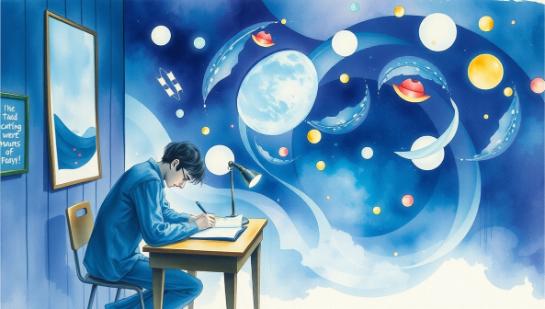 Results vary greatly from practitioner to practitioner.
Some people receive specific messages. Some receive complete sentences which are full of wisdom. Some people might also receive warnings regarding the future. These messages could use vocabulary you wouldn’t necessarily use or discuss things you wouldn’t necessarily be thinking about.
Eerie, isn’t it?
Creative people tend to discover ideas for stories, verses of poetry or visions for art. It’s like taking a tap into an inexhaustible wellspring of your imagination. The Surrealists weren’t wrong about this, automatic writing is a true liberator of creativity.
Once in a while you’ll write something actually prophetic. Information you just could not have had. Months later, the situation happens exactly as described. Coincidence? Maybe. Or perhaps you entered something beyond the ordinary consciousness.
The Skeptical Perspective to Consider
Let’s be honest, not everyone is fond of this.
Skeptics claim automatic writing is all self-generated. You’re not channeling anything from the outside-in but you’re just accessing different parts of your brain. Now that mysterious “wisdom” is nothing but your accumulated knowledge reorganized in a creative way.
Fair point, actually.
Our brains contain much, much more information than what we consciously reach. Memories, observations, overheard conversations etc. are all archived somewhere. Automatic writing may simply be a non-conventional way of gathering this data.
The ideomotor effect describes many of the supposedly supernatural occurrences. Ouija boards function exactly the same. Participants insist that they’re not moving the planchette consciously, but somebody’s muscles are making micro-movements. Perhaps automatic writing works from the same principles.
There are some psychologists who warn that vulnerable people may form unhealthy dependencies. The over-reliance on “channeled messages” may be a way of not exercising personal responsibility. Or worse, someone in struggle with mental health issues may take automatic writing to be a regime of proof that delusions are true.
These issues aren’t trivial. Go about this practice in a sensible way.
Yet even skeptics say automatic writing has a therapeutic value. If it aids you in accessing emotions or creativity, does the source matter tremendously? Whether it be spirits or subconscious, beneficial outcomes are beneficial.
Practical Uses Outside of Spirituality
 Automatic writing is not just for mystics and mediums.
Writers use it in the fight against creative blockages. When conventional brainstorming fails, automatic writing is often a way to get new concepts. You silence your inner critic, that nasty voice that says everything is wrong and allow the raw creativity to flow.
Sometimes therapists use it in their practice. Clients gets to explore buried emotions in a safe environment. It’s especially helpful for people who have a problem expressing feelings verbally. The page is then a secret place where anything can come out without judgment.
Problem-solving is also beneficial. Consciously looking at complex situations sometimes can lead to mental gridlock. Automatic writing allows your intuition to play a role. You may find solutions that your logical mind overlooked.
Another important application is self-discovery. Who are you below the social conditioning and learned behavior? Automatic writing can be used to get out authentic desires, fears, and values. It’s like talking to yourself but a smarter, more honest you.
Some folks keep regular automatic writing journals. Daily sessions turn into meditative practice. They follow the patterns to see how their inner wisdom unfolds through time.
The Possible Pitfalls and Precautions
This practice isn’t without its complications.
-
Not all scribbled messages are deep wisdom Sometimes you’re just processing the anxieties of yesterday. Or that television program you watched last evening. Learn how to separate true insight versus mental clutter. That does take practice and honesty.
-
Be careful not to give too much authority to automatic writing. If a message tells you to hurt yourself or other people, that’s obviously not legit spiritual guidance. That’s psychological distress that needs professional attention.
-
Similarly, don’t give up on critical thinking. Automatic writing shouldn’t be a substitute for practical judgment. If your “higher self” is telling you to quit your occupation on impulse and without financial back-up, maybe think more about that advice.
-
Some people get scared of what comes out. Intense emotions surface. Disturbing imagery appears. If automatic writing is consistently producing distress, as opposed to insight, perhaps you should take a break. Perhaps speak to a therapist before carrying on.
-
There’s also the issue of dependency raised above. Balance is essential. Use automatic writing as one tool among the many and not your only decision-making tool.
The Overlap between Science and Spirituality
 Here’s where things start getting really interesting.
Modern neuroscience shows that our brains are far more strange than we had imagined. Consciousness itself is extremely mysterious. We don’t really understand what’s going on in the brain to give rise to subjective experience.
Research into intuition shows us that we process information unconsciously before being consciously aware of it. Split-second decisions have been surprisingly accurate. Perhaps automatic writing taps into this intuitive processing.
Quantum physics brought us new concepts such as nonlocality and entanglement. Some theorists speculate that consciousness may go beyond individual brains. If true, perhaps accessing “higher wisdom” is not a metaphor, maybe consciousness really does interconnect somehow.
Science has not supported spiritual claims to automatic writing. But it hasn’t really set them definitively to rest either. We’re in some very interesting gray area where empirical research and subjective experience overlap.
Maybe both sides of the coin are true. Your subconscious mind is legitimately accessing something, call it universal consciousness, collective unconscious, or quantum information field. The label is not as important as the experience reality.
Conclusion
Automatic writing is in the strange area between psychology and spirituality, creativity and mystery.
Whether you think you’re channeling celestial beings or just talking to your subconscious, the practice has real value. It unlocks creativity. It surfaces hidden emotions. It is a practice which occasionally brings forth startling information with seemingly outside of normal consciousness.
The beauty? You don’t have to solve the metaphysical questions in order to benefit from it.
Try it yourself. Establish that quiet space. Pose your question. Let your hand move. What you get may surprise you or confuse you or inspire you. Perhaps all simultaneously.
Approach it with open-mindedness and at the same time with wisdom. Maintain discernment. Don’t give up critical thinking.
Who knows? You may find some wisdom you did not know you had. Or contact something truly beyond yourself. Either way the expedition inward is worth it.
The deeper consciousness of you awaits. It has messages for you. All you have to do is pick up that pen and write.

Leave A Comment