

Lessons from “Proof of Heaven” by Dr. Eben Alexander
 Questions are a source of curiosity. What happens when we die? Are we immortal in this moment? These were the profound questions Dr. Eben Alexander asked himself after emerging from his miraculous coma induced by an attack of a rare form of Alzheimer’s. As a neurosurgeon, he believed that only consciousness emerged from the brain. However, he had an extraordinary experience that changed his life.
Book Introduction
In 2008, Dr. Alexander fell into a deep coma for a week as a result of a severe case of meningitis. It was a medically hopeless case. Therefore, he couldn’t think or dream. Yet, he claimed to have experienced a miraculous change while in that horrific place, which many would call the “afterlife.”
After recovering, he struggled to make sense of the experience due to his medical training. The post-coma process completely shattered all his beliefs about his vocation. We must reconsider many of our societal assumptions about “near-death experiences.” It’s unimaginable. His book, Proof of Heaven, is this story, and these are the lessons I learned.
Lesson 1: We Don’t See Reality as It Is
As a professional, Dr. Alexander spent many years studying the workings of the computational brain intensively, and there, he discovered the key principle for decoding his mind. The world as we know it has no roots. What he believed was happening and how it turned out was drastically different.
Let me explain it this way: imagine someone who has vision but can only perceive the world in black and white. They have observed colored images but do not know the color itself. One day, however, they suddenly begin to see colors. All colors. It was a massive shock for Dr. Alexander, and for days, he kept his astonishment to himself. He told himself it was scientifically impossible.
This proves the saying: the more sophisticated the science, the simpler the instrument of exploration, and the more superficial the basis for discovery. Or, in other words, we could be a little more humble about what we know.
Lesson 2: There Is Consciousness Beyond the Brain
 Perhaps the most surprising lesson here is the fact that our identity (or consciousness) does not reside in the physical brain.
Dr. Alexander was in a coma, during which the higher, critical faculties of the brain are offline, and the parts that create thoughts and sort experiences and memories are shut down. Incredibly, he had some of the most vivid experiences of his life. Imagine your computer is not plugged into power, yet a complex, power-hungry program is running in the background.
This assumption suggests that consciousness is not something the brain creates. It is a signal that the brain imports from the world. Take a television, for example. It can receive broadcast signals, but it cannot create its programs.
Lesson 3: Love Is Stronger Than Anything Else
Dr. Alexander has felt “unconditional” love for years and calls it “unconditional.” It is deeper, more profound, and limitless.
He calls it the fundamental energy of the universe, the glue that holds everything together. Think of the craziest love you’ve ever had. Now imagine that love multiplied by a million. Its story is more miraculous than that kind of irresistible love.
Through that experience, I learned how much we waste time on nothing. If everything is supposed to be based on love, as is promoted, shouldn’t that be the root of our being?
Lesson 4: We Are One
 Dr. Alexander discovered and demonstrated this with the following words: “Everything in creation is connected to everything else by the fundamental field.” He was conscious as if he were a node in a vast cosmic web of consciousness.
Consider us waves of the same ocean. We may appear different on the outside, but we are identical on the inside. Consider your hands, your feet, and your heart as other parts of this same body. They may seem separate, but they are closely linked.
And because of this close connection, what happens to one will influence the rest, at least to some extent. Even those on the other side of the world are no longer beyond our reach.
There Is More to Life
Dr. Alexander pondered deeply on the most fundamental things of life: birth, trials, and death. But his place and way of life opened up many new paths for us. They showed us that life is not what it seems or what it looks like at first glance. They taught us that life is never what we think it is, and that there is always something more than meets the eye.
Finally, he concluded that the soul longs to learn and grow. Every barrier, every encounter, every event makes us greater. It is as if we all attend a large school and take various classes and subjects according to our individual needs to grow.
For example, some argue that suffering is not a punishment for some but a challenge to develop the courage or compassion to be with the living in the afterlife.
Lesson 5: We Do Not Face Judgment
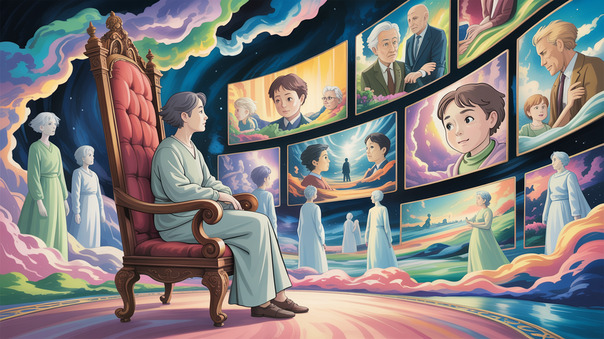 For example, we do not need to talk about the afterlife. We attend religious classes and learn how to discern right from wrong. But Dr. Alexander’s situation was completely different. It was like expecting to be left alone in a hurricane. The person who scared him could not punish him for saying everyday things.
But that doesn’t mean he doesn’t do good deeds. He thought that one day everyone would tell their life story. Just as we can look back on our lives today and see how we have affected others, we can sit in front of the screen and feel their pain and happiness in the same way.
Of course, this suggests another way to frame the concept of freedom. (For example, imagine a child who understands what he shouldn’t do instead of fearing his parents punishing him.)
Lesson 6: Adversity Makes Us Anxious
Adversity is often the only way for some people to break free from negative thinking.
Dr. Alexander was a completely new person. He went from being a regular neurosurgeon to a prophet with a mission to share what he had learned. His near-death experience wasn’t a pleasant journey. It was his very nature that made him different.
He shows us that the things that scare us can destroy us in unexpected ways. The very bacteria that almost killed him ended up being the source of what he describes as his deepest talent. It’s like a metal container of intense heat that turns coal or sand in an oyster into diamonds or pearls.
Lesson 7: Science and Spirituality Are Better Companions
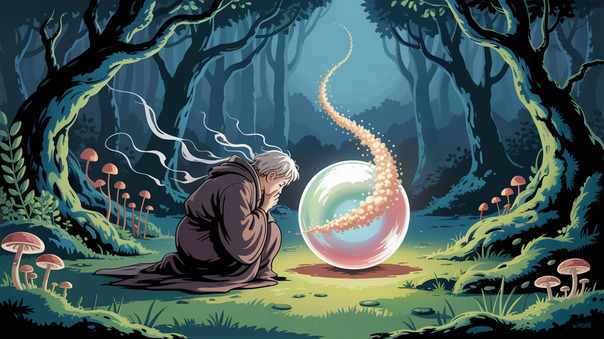 Dr. Alexander does not refute science after his experience. To him, actual science and spirituality are two ways of understanding the same reality.
He uses his medical knowledge to convince you that his case is different. Since his brain was so messed up that he could not witness the hallucinations, it is harder to support his claims. A detective can solve cases using both forensics and intuition. Both of these modes are effective.
In other words, we do not have to choose between science or spirituality to understand our lives. The most complete perspective comes from both.
Lesson 8: How We Live Matters
The most important lesson is that loving one another is very important. If we are all one, members of the same consciousness, then harming another is in some way harming ourselves.
Dr. Alexander has a new mission: to love more and judge less. He now sees everyone as part of a larger cosmic pattern. He sees everyone he meets as a long-lost relative he never knew existed.
Of course, his medical practice, the way he treats strangers, and his perspective on the world may have changed. When we truly see others as part of ourselves, everything changes.
What This Means for Us
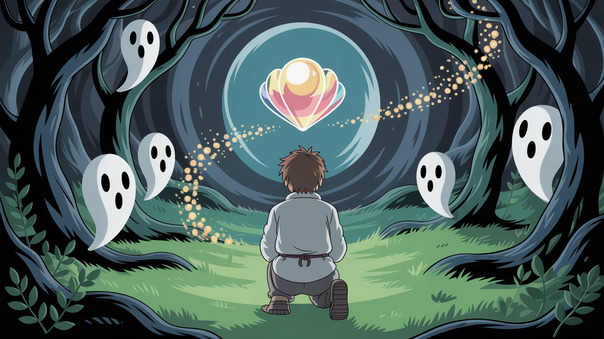 Whether we believe Dr. Alexander’s story or not, it is his story that raises the most profound questions for us. But what if consciousness is not just a brain process? What if love is? What if we were all so connected to each other?
Just asking these questions would make a huge difference. It would make us understand more deeply, think more deeply, and have a broader mind.
The fact that a scientist who didn’t believe in God could become a spiritual messenger gives us this amazing lesson about life. “Nothing is impossible.” We have known this truth all our lives. The more willing you are to experiment with your entire value system (whatever that may be), the more open you will be to something that will change everything.
As a final lesson, we must learn to be open-minded. To recognize what we don’t know. Fill your daily life with curiosity, not stereotypes. Because what we discover without actually seeing is often the most surprising. Like Dr. Alexander, who walks the line between life and death.














Leave A Comment