

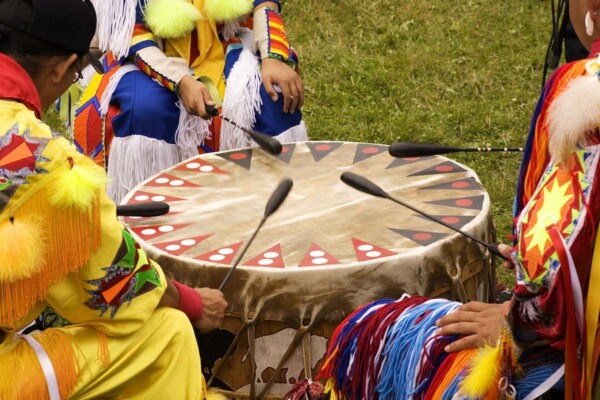
In order to enter into the world of indigenous, Earth centered people, it is first necessary to try to begin to understand the ways of perceiving and understanding of the First People of this land. We must be like children, with open hearts and minds, a flexible and malleable belief system, and insatiable curiosity and wonder. So how did/do the children of the First People of this land learn the wisdom of their culture? First and foremost, through intimate contact with their environment, including all aspects of creation, the Earth, the heavens, the rain and wind, the fire, the mountains, the rocks, the trees, the flowers, the river, the plants, and in particular, their close relatives, the animals. They also learn much through their senses and their physical bodies, being very active, and participating in many games and tests of skill, as well as by doing the same jobs alongside their elders. From very early on, the children learn that they are part of this family of beings, which include all of creation.
In the “Modern World,” the world of science and industry, children are taught through naming all the things around them, and explaining their functions and uses, and understanding them as separate. Within the cultures of the First People, children are taught to understand that they are no more and no less than any other part of this creation, and are in fact intimately connected with all they can see, hear, and touch, think, remember, and speak about. Naming then becomes more about expressing relationship and connection, and reflects that perception. The First People show their children how to observe the natural world in order to learn how to live in balance and harmony with creation.
The second most important way these children learn about their culture is through the stories, songs, and teachings of the people, passed down from the grandmothers and grandfathers, and other family members to the children. As we seek entry into the world of the first people of Turtle Island, in order to understand the world from this perspective, we must first open our eyes, ears, and hearts, paying attention to creation, observing the natural world, and bringing the voices of the grandmothers and grandfathers to life through the stories of the People.
Before the “Modern World” perception was brought to this land, the First People lived in family groups, extended families forming clans, with the clans gathering together to form tribes. Each family and clan had its stories passed down by the grandmothers and grandfathers, and these formed the stories and teachings of the tribe. Many tribes gathered together to form alliances, or nations, particularly after Europeans began to invade the land. The true span of these tribal First Peoples covers Canada and Alaska, North America, and South America. This course will primarily focus on the peoples of the North American continent, and particularly those most affected by the invasion of European peoples, with the resulting devastation of their culture.
The main focus of this course is exploring Native American spirituality, and when talking about the First People, there is no separation between a world of spirit and a world of flesh, but always one creation, a wonder made by the Creator and enjoyed by all. Because of this, it is not possible to talk about Native American spirituality as being something separate, something to be discussed out of context of day-to-day life. Instead, if we want to understand the spiritual perspective of the Native American peoples, we can come to this learning like children, eager for the stories that will teach us how to live.
Because of the great diversity of peoples and practices in the indigenous cultures of North America, and because, from an indigenous perspective, the human people cannot be removed from the context of all the other beings they live with, we will use stories, in which lie the records of the culture, as our guides on this journey. We will travel across the land, visiting different tribes, and absorbing their stories and teachings. Stories of the people of the Fourth World contain many life lessons, and can be heard and understood on many levels, with many layers of metaphor. Cultures with oral traditions and little written history use stories as foundations of culture. Each story becomes a seed planted in the fertile ground of the mind, heart, and imagination of the people. Nurtured by a deep connection to the Earth, the plants and animals, the tribal community, and all aspects of creation, the seeds of culture grow strong in the body of the people. They then flower into productive and life affirming community members, eventually bearing the precious fruit of the wise elder, who completes the cycle by planting the seeds once again. The key to understanding a culture is in understanding its stories.
Course Continued….
This is an excerpt from one of the 40 required bachelor’s courses offered in the University of Metaphysical Sciences metaphysical degree program.
The course Native American Studies is also available for individual purchase at our online store.
*Please note that courses purchased through metaphysicalsciencesstore.com are for personal interest only, and not as part of the degree program. If you are interested in pursuing your metaphysical degree, please fill out an enrollment form here.









Leave A Comment